Ep. 41 | Home speakers built from car speakers — surprisingly good? Turning car audio into a home stereo that sounds this good

Creator’s own settings as stated in the video (timestamps link to the moment). Not official values — test on scrap first.
Bill of materials
Welder, accessories, consumables and parts used in this build; quantities and specs are editable Download BOMDescription
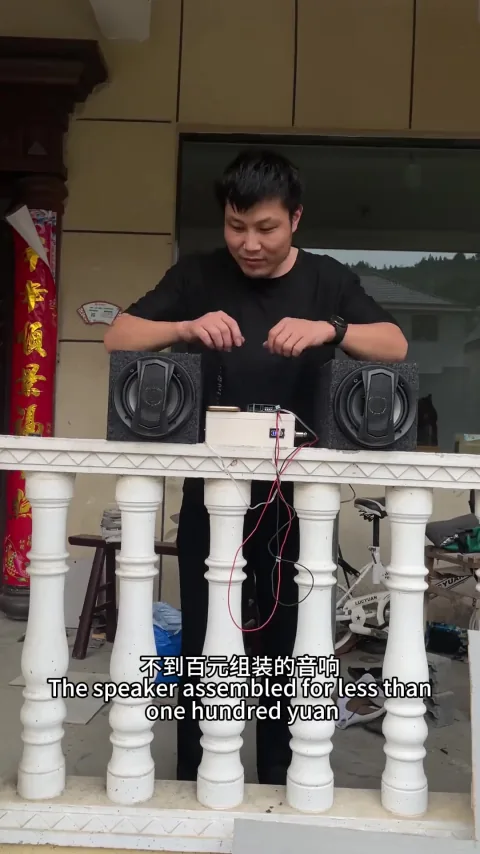
Two 6.5-inch full-range car speakers + a Bluetooth amp board + a 15 × 18650 3S5P 12V power box: a home stereo for under ¥100
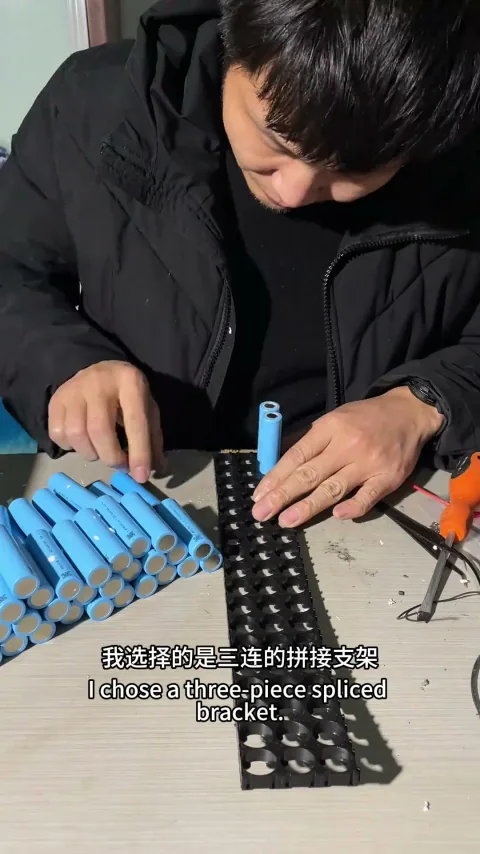
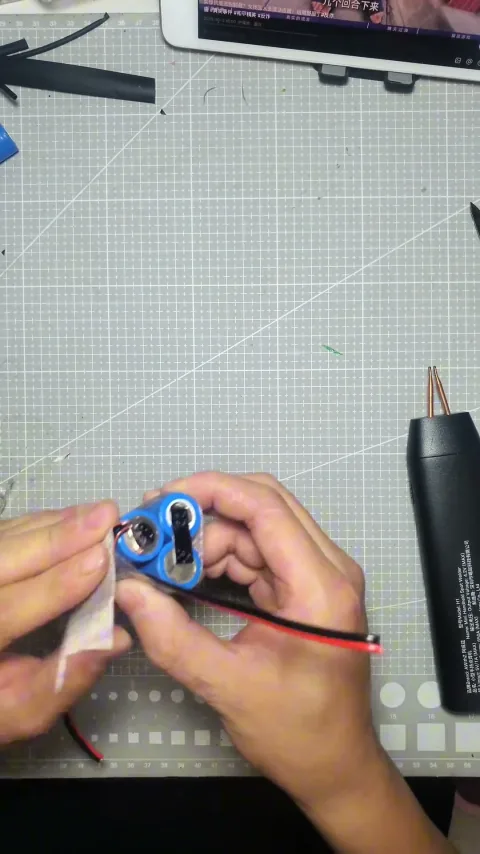
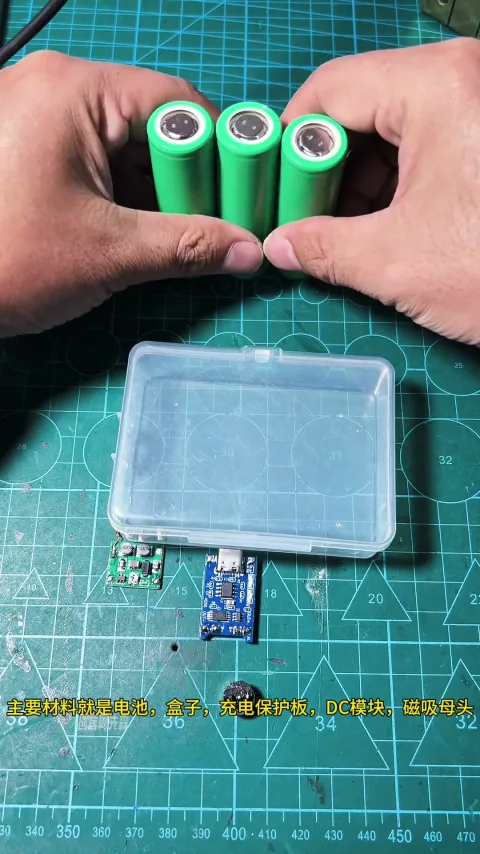
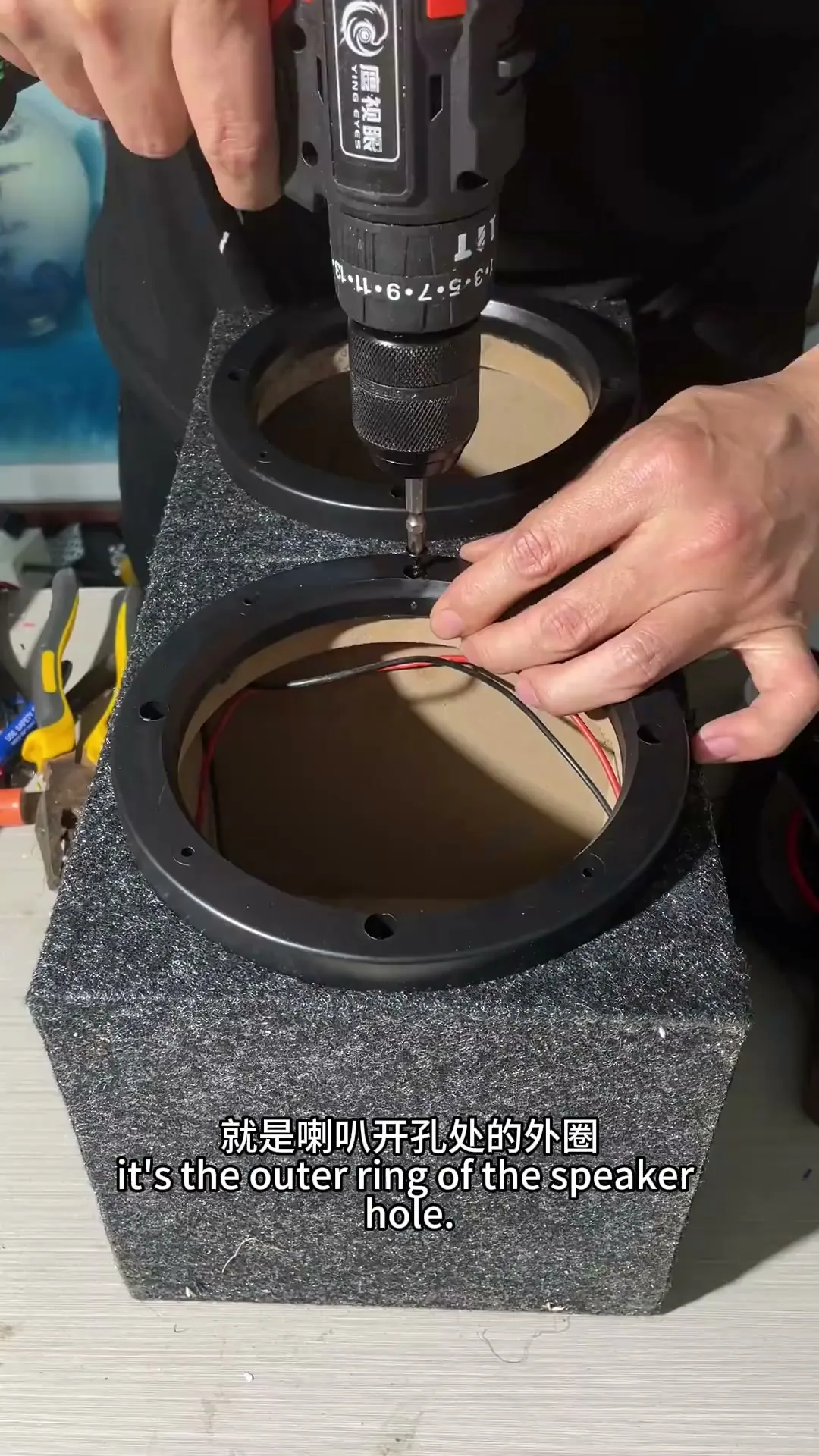
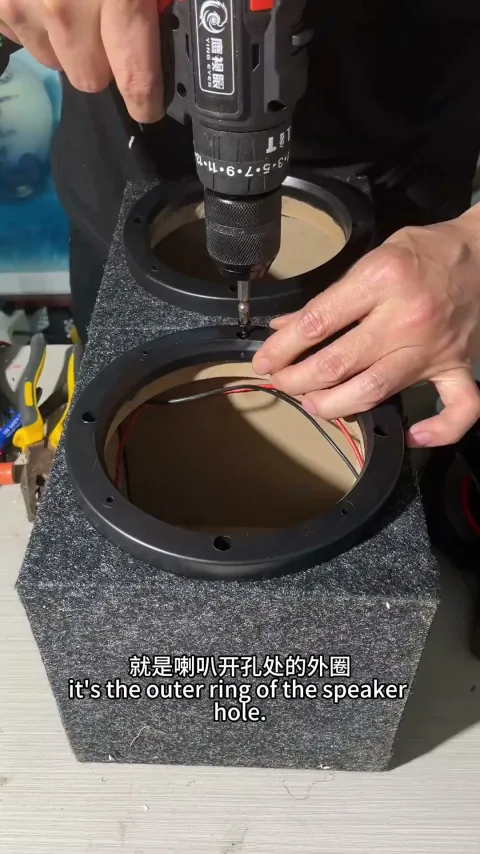
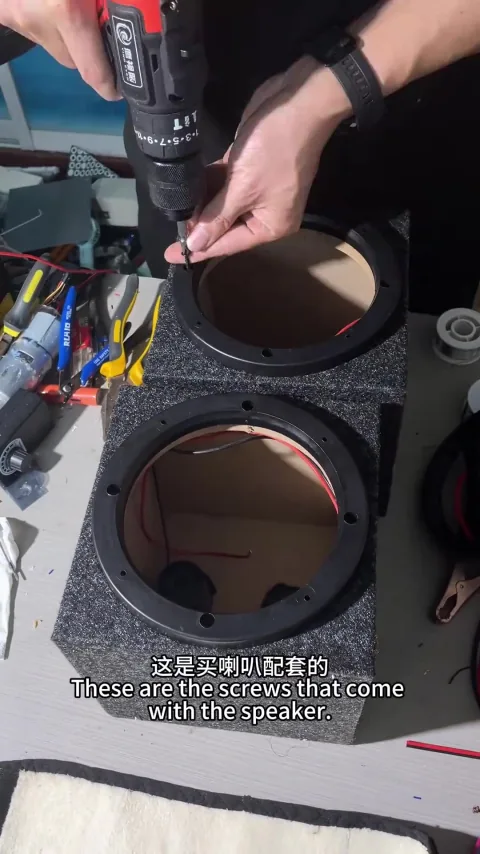
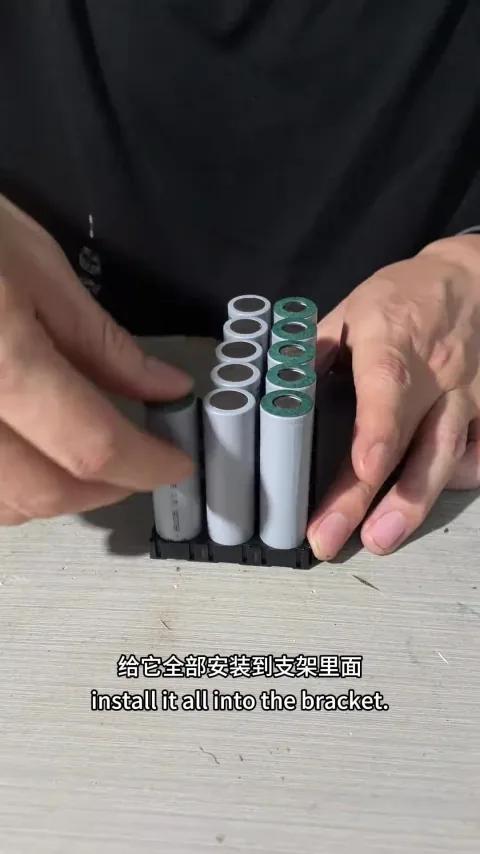
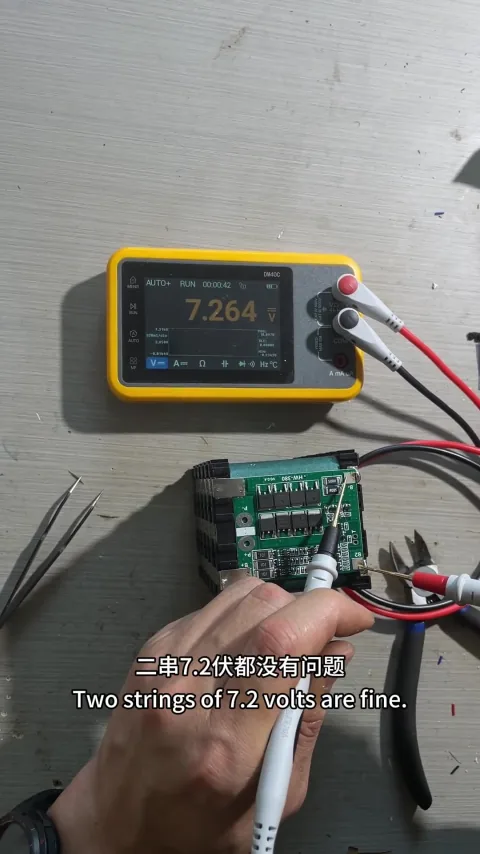
Two full-range (bass/treble) car speakers go into two 6.5-inch pre-cut speaker boxes: the positive and negative leads pass through the wiring hole, and the speakers are screwed in. The amp is an XY-T30L module with Bluetooth and bass/treble control; plug in the left and right channels, the speaker terminals are screwless, and it runs on 12 or 24V. To keep things simple for the older folks, he builds a dedicated power supply: 15 × 18650 cells with fish paper on the positive ends in a dedicated holder, 3S5P for 12V, fish paper around the outside against knocks, then spot-welded. A balancing BMS is a must; the multimeter reads 10.8V at input/output (not fully charged, normal), 3.6V for one group and 7.2V for two. The common-port input/output leads are connected and protected with fish paper + fibre tape. The box is drilled for a switch, battery gauge, charge input and power output; charging uses a 5–30V-input constant-voltage/constant-current buck-boost module set to about 12.6/12.7V, insulated with heat-shrink. Battery output and charge input both go to the switch input; all negative leads are twisted together, tinned and heat-shrunk. On power-up the gauge shows 2 bars; the lid goes on with screws, the phone connects over Bluetooth and plays, and the creator claims ¥1000-class sound quality. Commenters think the box size doesn’t match and a digital amp is just loud.
Outcome
| Goal | Build a portable Bluetooth home stereo from car speakers with a 12V battery power box |
| Build | 2 × 6.5-inch full-range car speakers + XY-T30L Bluetooth amp + 3S5P 18650 power box |
| Result | Finished and playing over Bluetooth · verified on camera: 228–244s phone plays over Bluetooth; the gauge showing 2 bars proves the wiring is right (220s) |
Steps9 steps · click a frame to jump
 1. Goal: a home stereo for under ¥100
Two car speakers turned into a home stereo, under ¥100, done in a few steps.
00:00 – 00:14 2. Box the speakers: run the wires, screw them in
Full-range car speakers + 6.5-inch pre-cut boxes; the positive and negative leads go through the wiring hole at the back and come back out; screws go around the speaker cut-out; pull the leads out, connect the speaker, fix it in place, same for both.
00:14 – 00:54 3. Fit the XY-T30L Bluetooth amp
Amp module with Bluetooth and bass/treble control; plug in the left and right audio leads, the speaker terminals need no screws; feed it a matching 12V or 24V supply and it’s done.
00:54 – 01:09 4. 15 × 18650 into a 3S5P 12V pack
A dedicated power supply for the older folks; fish paper on the positive ends, into the dedicated holder with the cap on; 3S5P for 12V; fish paper around the outside against knocks, then spot-weld.
01:09 – 01:48 5. Why 12V
The car speakers and the amp module both run on 12V (or 24V), so the pack matches.
01:48 – 02:02 6. Fit the balancing BMS, measure the voltages
After spot welding a balancing BMS is a must; the multimeter reads 10.8V at input/output (pack not full, normal), the same at the main + and −, 3.6V for one group and 7.2V for two; connect the common-port input/output leads, cover with fish paper, fibre tape around the outside, and wrap the exposed + and − in fish paper too.
02:02 – 02:44 7. Drill the box, fit the 5–30V buck-boost charging module
A round hole for the switch, a square one for the gauge, a charge input and a power output on top; the CV/CC buck-boost module goes on the charge input — feed it 5–30V from an adjustable supply, set its output to about 12.6/12.7V, wire + and −, screw it to the box floor, heat-shrink over the output leads.
02:44 – 03:21 8. Wire the switch, gather the negatives, power-on check
The battery output and charge input leads go to the switch input, the switch output to the gauge positive; all negative leads twisted together, tinned and heat-shrunk; power on, the gauge shows 2 bars, the wiring is fine, lid on and screwed tight.
03:21 – 03:48 9. Bluetooth playback and verdict
The 12V power box drives the home-built speakers; the phone connects over Bluetooth and plays; the creator says it sounds like a ¥1000 system, fine for karaoke at home or the older folks’ dancing.
03:48 – 04:21
Bill of materials
| Full-range car speakers ×2 | 6.5-inch bass/treble, TS-GE1641 · Sound |
| Speaker boxes ×2 | 6.5-inch cut-out, with wiring hole · Enclosure |
| Bluetooth amp module ×1 | XY-T30L, bass/treble control, 12/24V · Amplification + Bluetooth |
| 18650 cells ×15 cells | 3.7V · 12V pack |
| Dedicated holder / fish paper | Hold and insulate |
| Balancing BMS ×1 | Common port · A must |
| Fibre tape / heat-shrink | Reinforce and insulate |
| Box + switch + gauge + charge port + output port | Power box |
| CV/CC buck-boost module ×1 | 5–30V input · Charging |
| Multimeter ×1 | Measure voltage |
Measured on camera
| BMS input/output voltage | 10.8 V 02:10 |
| Single-group voltage | 3.6 V 02:16 |
| Two-group voltage | 7.2 V 02:18 |
| Gauge at power-on | 2 bars 03:40 |
Creator’s tips
- Match the pack voltage to what the speakers / amp need (car audio 12V, amp 12/24V) 01:48
- With the BMS connected, check with a multimeter: 10.8V when not full is normal, then measure one group / two groups to confirm balance 02:09
- Feed the buck-boost charging module from an adjustable supply first and set its output to 12.6/12.7V before connecting the battery 03:04
Li-ion safety
- A balancing BMS is essential when building a Li-ion pack 02:00
- Fish paper on the positive ends, fish paper around the outside so knocks don’t damage the cells, and wrap the exposed + and − too 01:21
- Tin the joints, then insulate with heat-shrink 03:18
Quotes
Cost & time
| Total | <100 |