
Creator’s own settings as stated in the video (timestamps link to the moment). Not official values — test on scrap first.
Bill of materials
Welder, accessories, consumables and parts used in this build; quantities and specs are editable Download BOMDescription
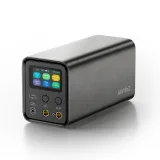
UF20B at gear 60 welding 0.05 copper: on iron it tears two holes out; on a cell negative it’s a bit weak; nickel strip as a base layer recommended
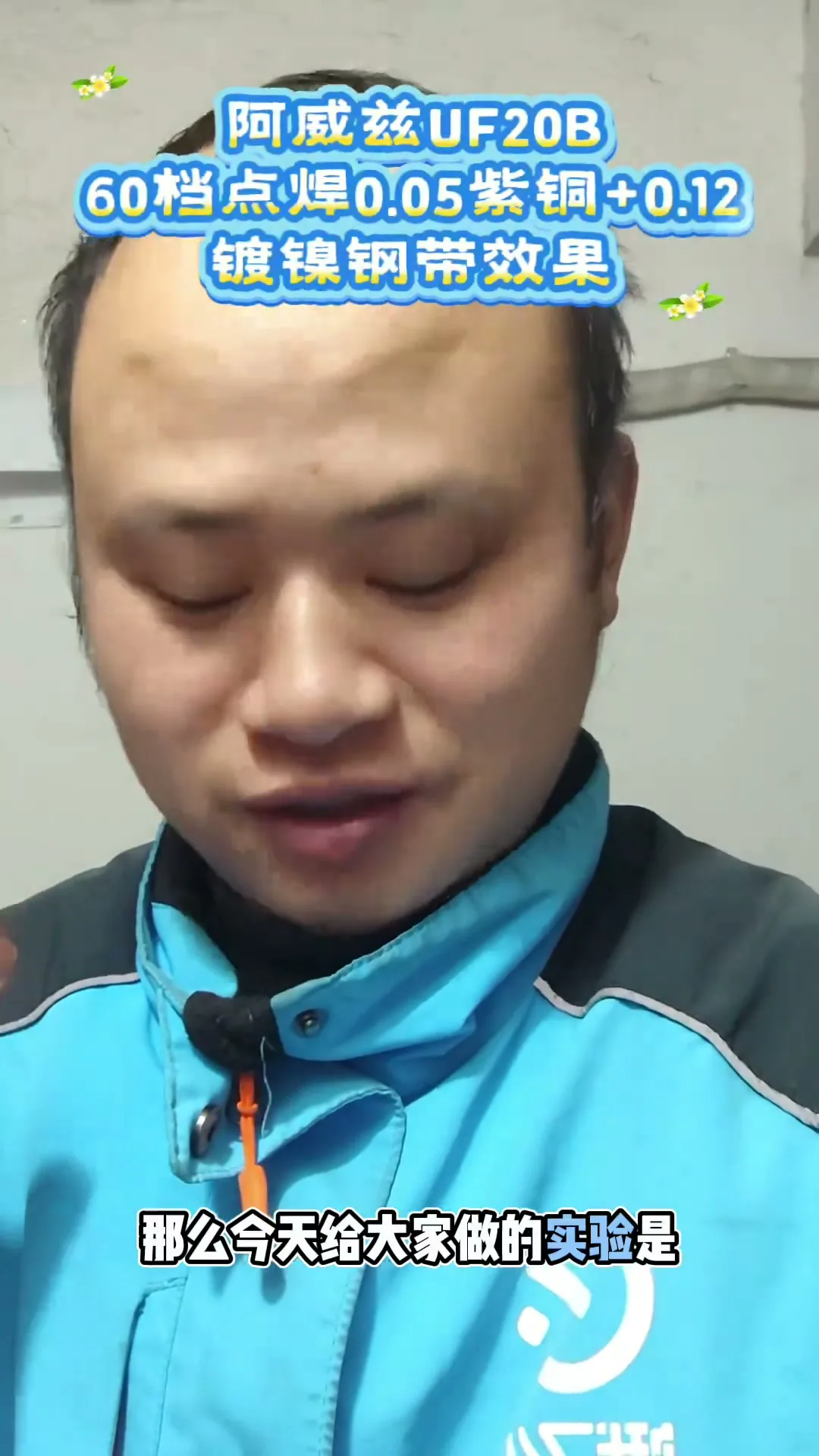
A follower reported that 0.2 copper stacked on 0.2 nickel-plated steel strip wouldn’t weld; the creator says he doesn’t recommend 0.2 copper (very demanding on the machine). With an AWithZ UF20B + upgraded No. 6 welding pen at gear 60 he runs a same-settings comparison: 0.05 copper strip welded to a rusty iron pipe and to the negative of a Jiashikai cell. The welds on iron are blackened (high current), and pulling tears two holes out of the iron; 0.05 copper stacked on 0.12 nickel-plated steel strip on the cell negative peels off leaving two holes, not torn apart. Conclusion: at the same gear 60 the result on iron is clearly much better; use nickel strip as a base layer before welding copper for a stronger joint.
Outcome
| Goal | Verify how the UF20B at gear 60 welds 0.05 copper on different base metals |
| Build | 0.05 copper strip welded to an iron pipe / a Jiashikai cell negative (stacked with 0.12 nickel-plated steel strip) |
| Result | Solid on iron (base metal tears); welds on the cell negative but only moderately strong; conclusion is that a nickel base layer is stronger · verified on camera: Hand pull tests, tear marks visible on screen (93–131s) |
Steps8 steps · click a frame to jump
 1. The trigger: 0.2 copper on 0.2 steel won’t weld
A follower reported 0.2 copper strip stacked on 0.2 nickel-plated steel strip won’t stick; the creator doesn’t recommend 0.2 copper, it’s very demanding on the welder.
00:00 – 00:15 2. Test design: same settings, two base metals
One is a rusty iron pipe (not stainless), the other a Jiashikai cell negative, same welder settings, see how the results differ.
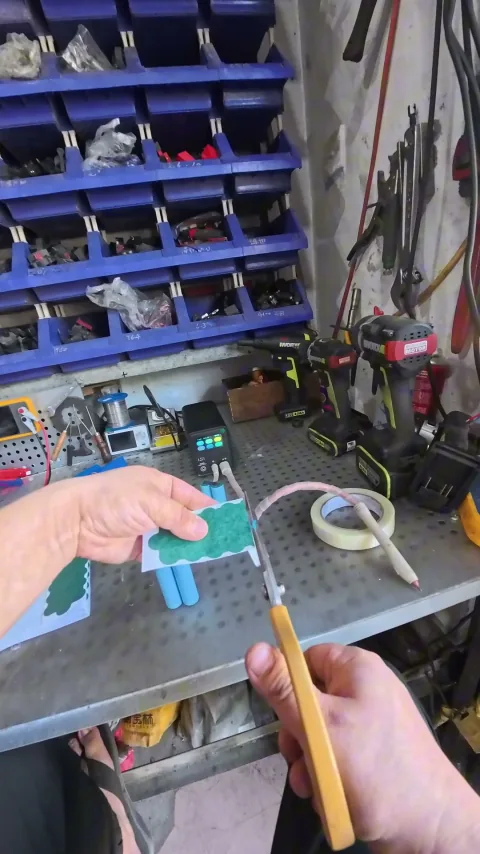
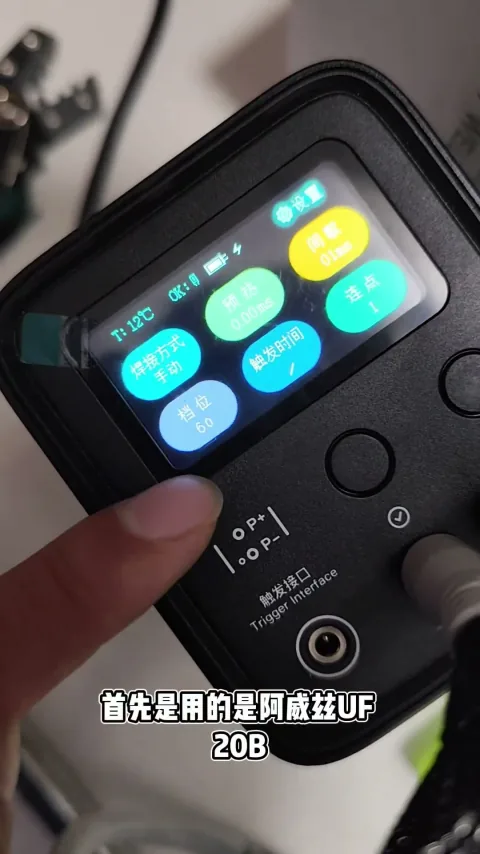
00:15 – 00:36 3. Setup: UF20B + upgraded No. 6 pen, gear 60
AWithZ UF20B, upgraded No. 6 welding pen, gear 60; screen shows T:12℃.
00:36 – 00:42 4. Material: 0.05 copper strip
Copper strip thickness 0.05.
00:44 – 00:49 5. Welding to the iron pipe: welds blackened, high current
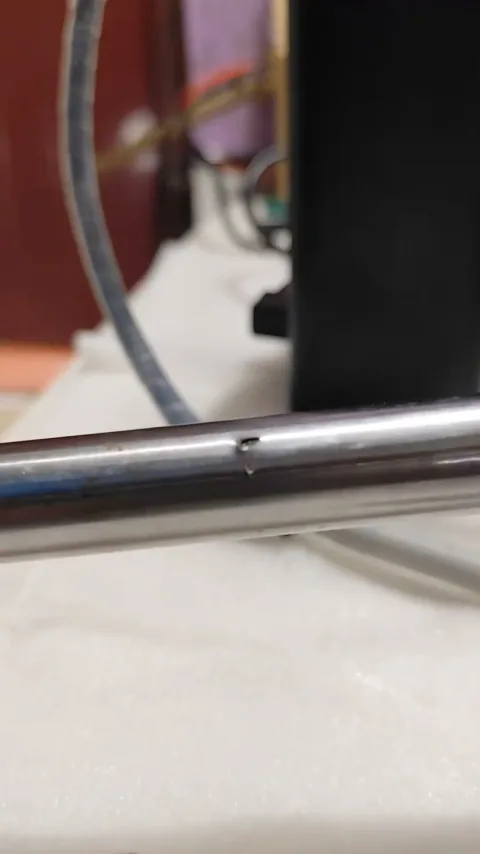
The 0.05 copper strip is spot-welded to the iron pipe; the welds are a bit blackened, which means the current is fairly high.
00:50 – 01:20 6. Pull test: two holes torn out of the iron
Pull test — the copper strip rips the surface off the pipe, two holes torn out of the iron; the weld is stronger than the base metal.
01:26 – 01:46 7. Control: copper on 0.12 nickel-plated steel strip on the cell negative
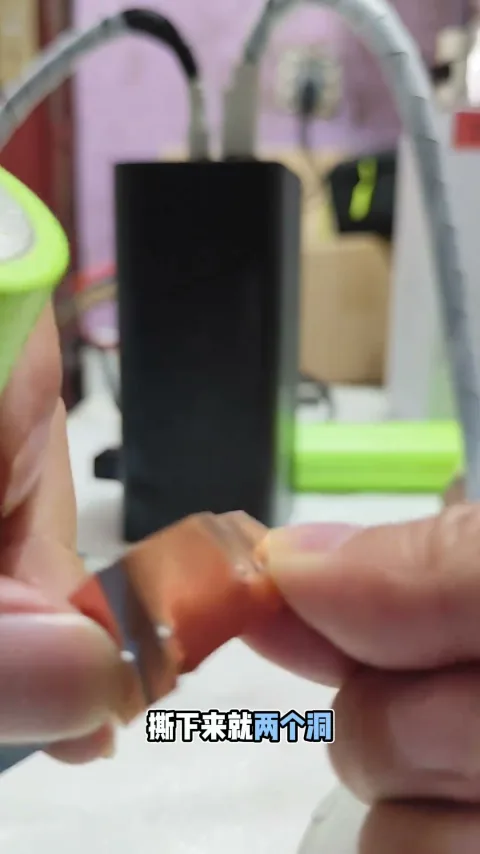
The same 0.05 copper stacked on 0.12 nickel-plated steel strip welded to the Jiashikai negative peels off leaving just two holes, not torn apart.
01:46 – 02:11 8. Conclusion: much better on iron; nickel base layer recommended
At the same gear 60 the result on iron is clearly much better; use nickel strip as a base layer before welding copper — it’ll be stronger.
02:11 – 02:30
Bill of materials
| AWithZ UF20B spot welder | Upgraded No. 6 welding pen, gear 60 · Spot welding |
| Copper strip | 0.05mm · Material welded |
| Nickel-plated steel strip | 0.12mm · Base-layer control |
| Rusty iron pipe | Base metal 1 |
| Jiashikai cell | Base metal 2 (negative) |
Measured on camera
| UF20B screen temperature | 12 ℃ 00:40 |
| Pull test result on iron | Two holes torn out of the iron, welds did not let go 01:42 |
| Pull test result on the cell negative | Peeled off leaving two holes, not torn apart 02:07 |
Creator’s tips
- When welding copper, lay nickel strip down first as a base — the weld will be stronger 02:26
- A blackened weld means the current is fairly high 01:18
Pitfalls
- 0.2 copper strip not recommended (stacked on 0.2 nickel-plated steel strip it won’t weld; very demanding on the welder) 00:02
- At the same gear, welding to iron and to a cell negative differ a lot — the base metal decides the strength 02:19